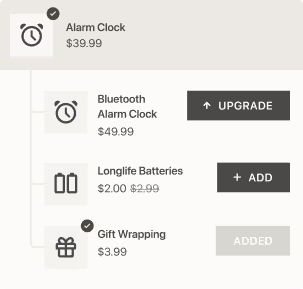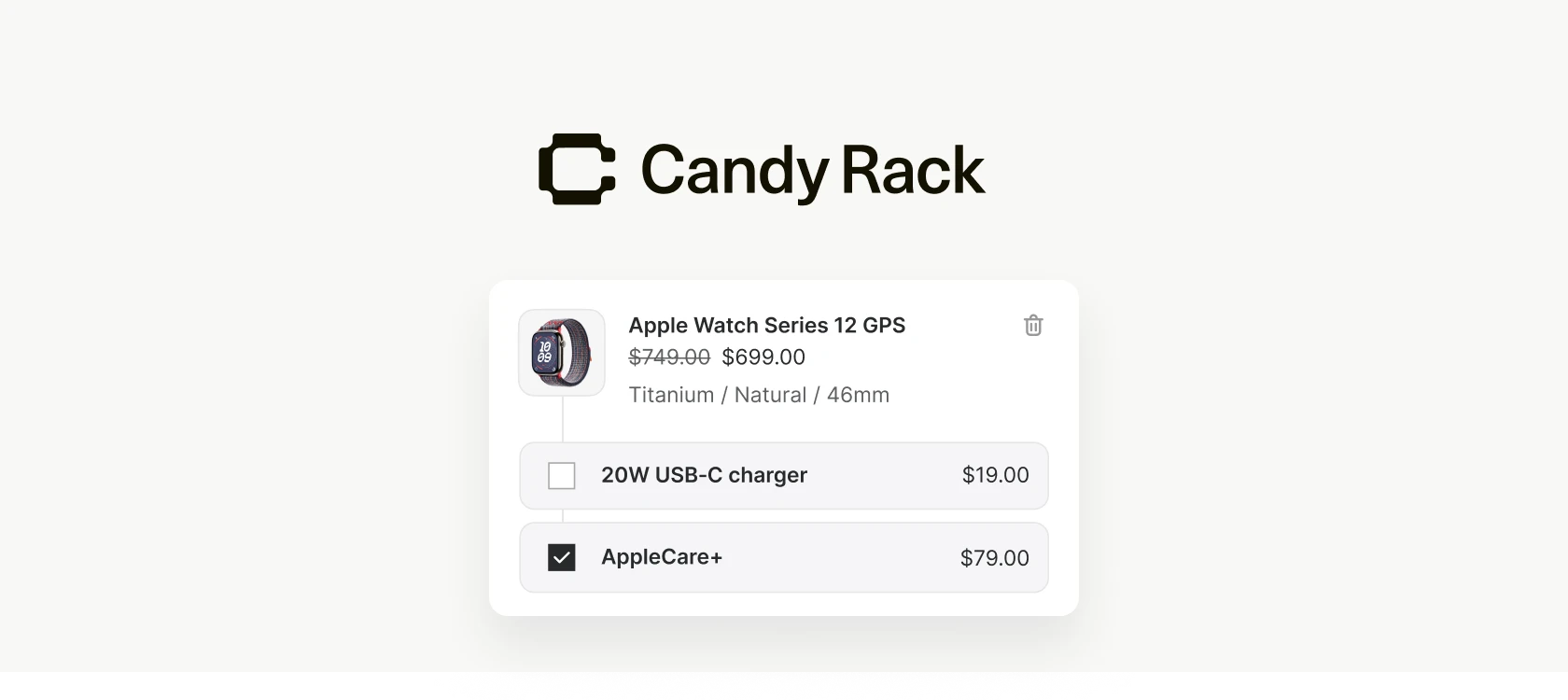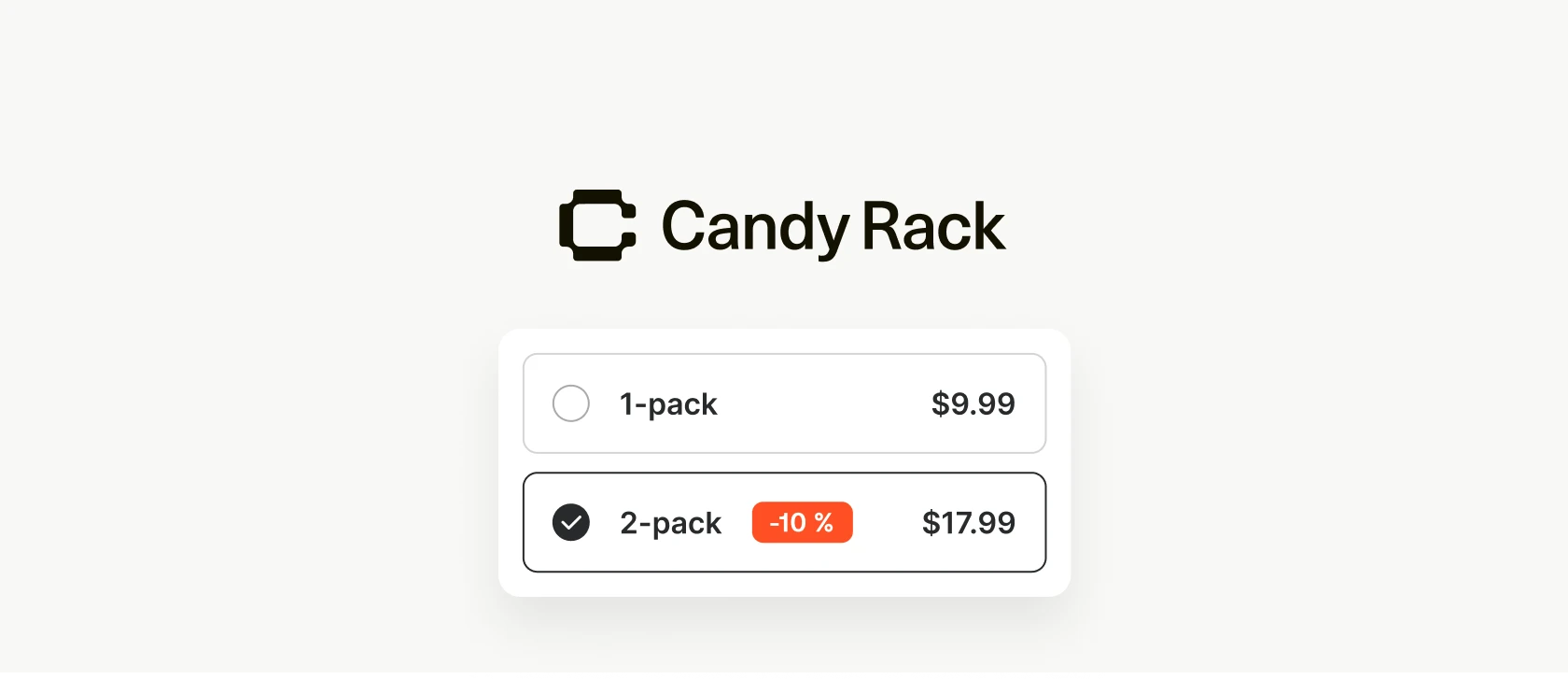
Open almost any Shopify upsell app, switch on its automatic recommendations, and underneath they're nearly all calling the same thing: Shopify's Product Recommendations API. Same data, same logic, the same suggestions, app after app.
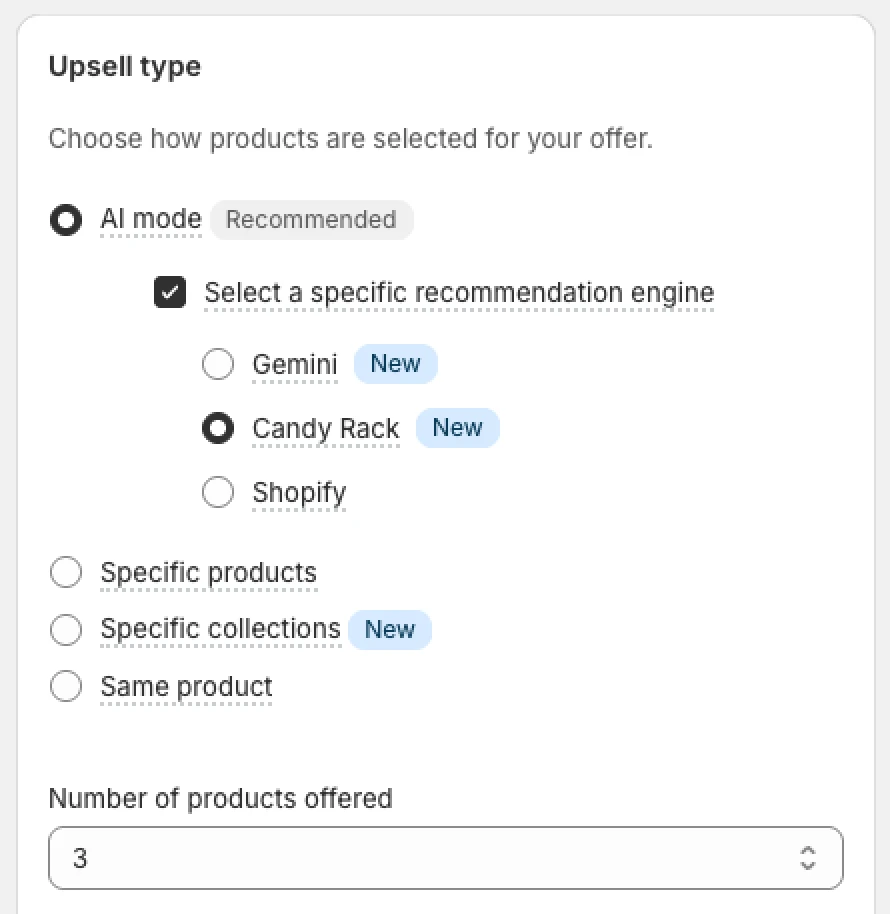
Candy Rack's AI mode used to work that way too (with additional logic on top of that). Not anymore. AI mode now runs on a recommendation engine you choose, with three options: Shopify, the original, plus two new ones you won't find paired together anywhere else, Google's Gemini and a model we built ourselves.
Based on our testing, we can't say one engine is better than the others. In some cases Shopify came out best, in others it was Gemini or Candy Rack. Which engine is right for your store depends on a lot of factors: catalog size, order history, store segment, and more. That said, Shopify's engine tends to perform worse on larger catalogs and newer stores.
The Gemini engine: reasoning about the use case
The Gemini engine (we use Gemini 3.1 Flash Lite, picked for speed and cost) reads your catalog and the product a shopper is viewing, works out what would round out the purchase, and pairs it with complementary items from adjacent categories.
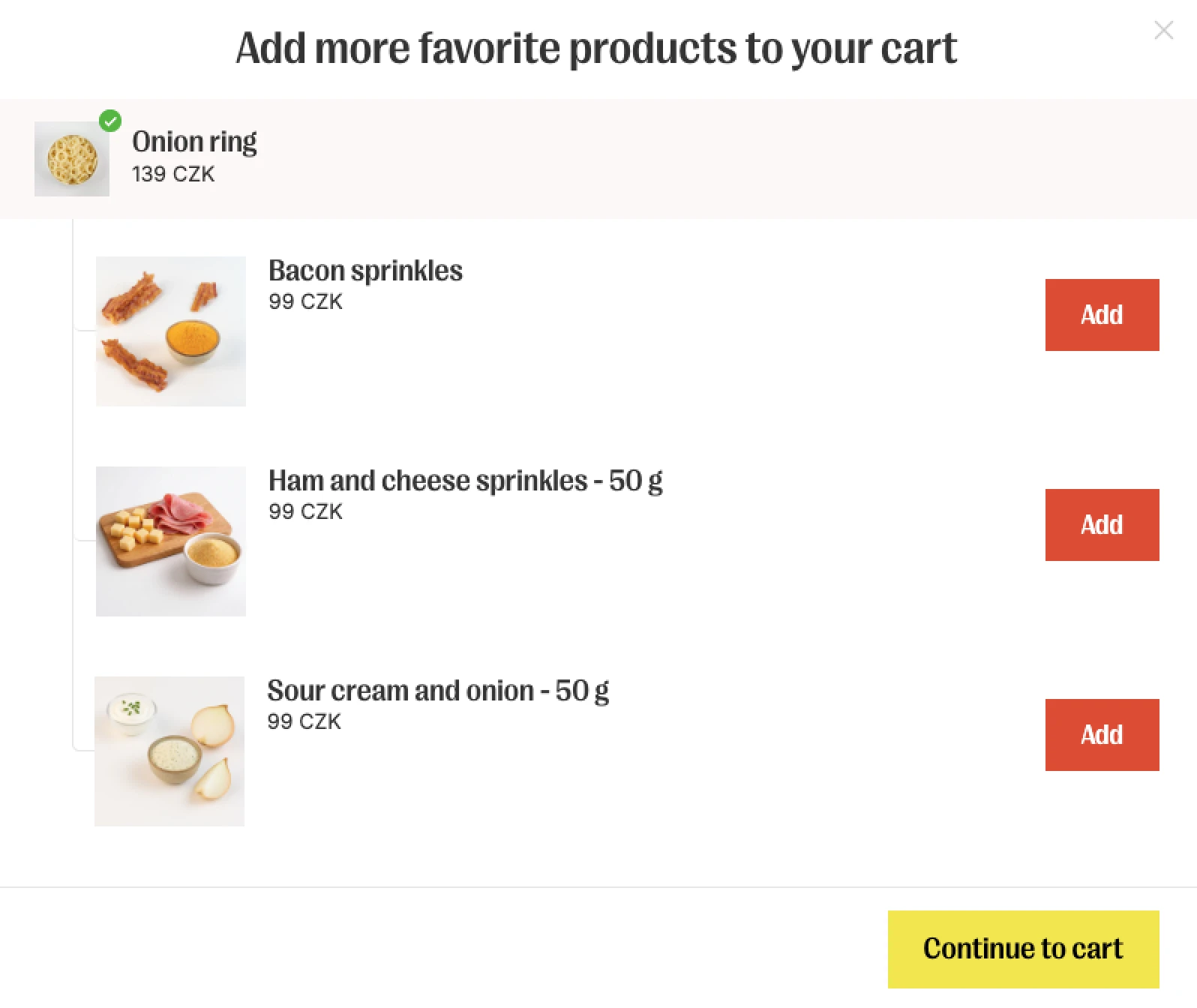
Someone buying a yoga mat gets a block, a strap, and a water bottle, not a second mat. It ranks its picks by how likely each is to be added and deliberately spreads them across categories. Because it reasons from your catalog rather than from past behavior, it works the moment you turn it on, which makes it a strong choice for newer stores and for products you've never upsold before.
The Candy Rack model: purpose-built for upselling and cross-selling
Our own engine takes a different tack. We built it specifically for upselling and cross-selling, and it bakes in what we've learned over years of running Candy Rack: which products genuinely belong together, why the cart is a different moment from the product page, and how a good upsell completes a purchase instead of competing with it.
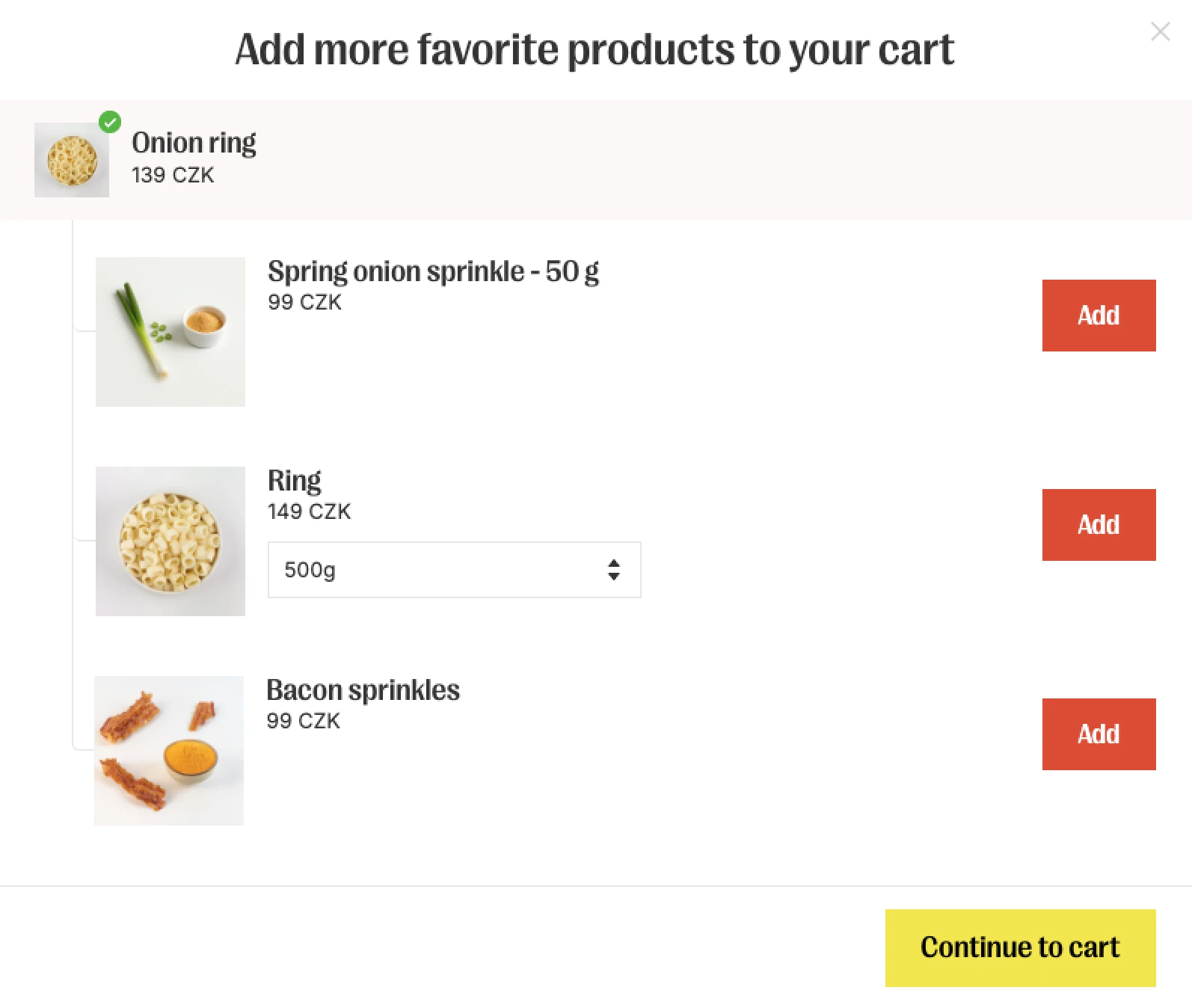
Given the product a shopper is viewing, it ranks the rest of your catalog for the strongest items to add alongside it, in the split-second window when cart decisions actually happen. The result is often balanced offer with complementary products and related products.
The Shopify engine: the familiar baseline
The third option is the one that powered AI mode until now, and the one most upsell apps still run on. Shopify's Product Recommendations API predicts relevant products mainly from purchase history (what sells together) and product descriptions (what reads as similar), falling back to shared collections when a product is too new for either. One catch: it auto-generates "related" lookalikes, but true "pair it with" cross-sells have to be curated by hand in Search & Discovery. So out of the box it leans toward similar and frequently-bought-together items rather than deliberate add-ons, but it really depends on the store category.
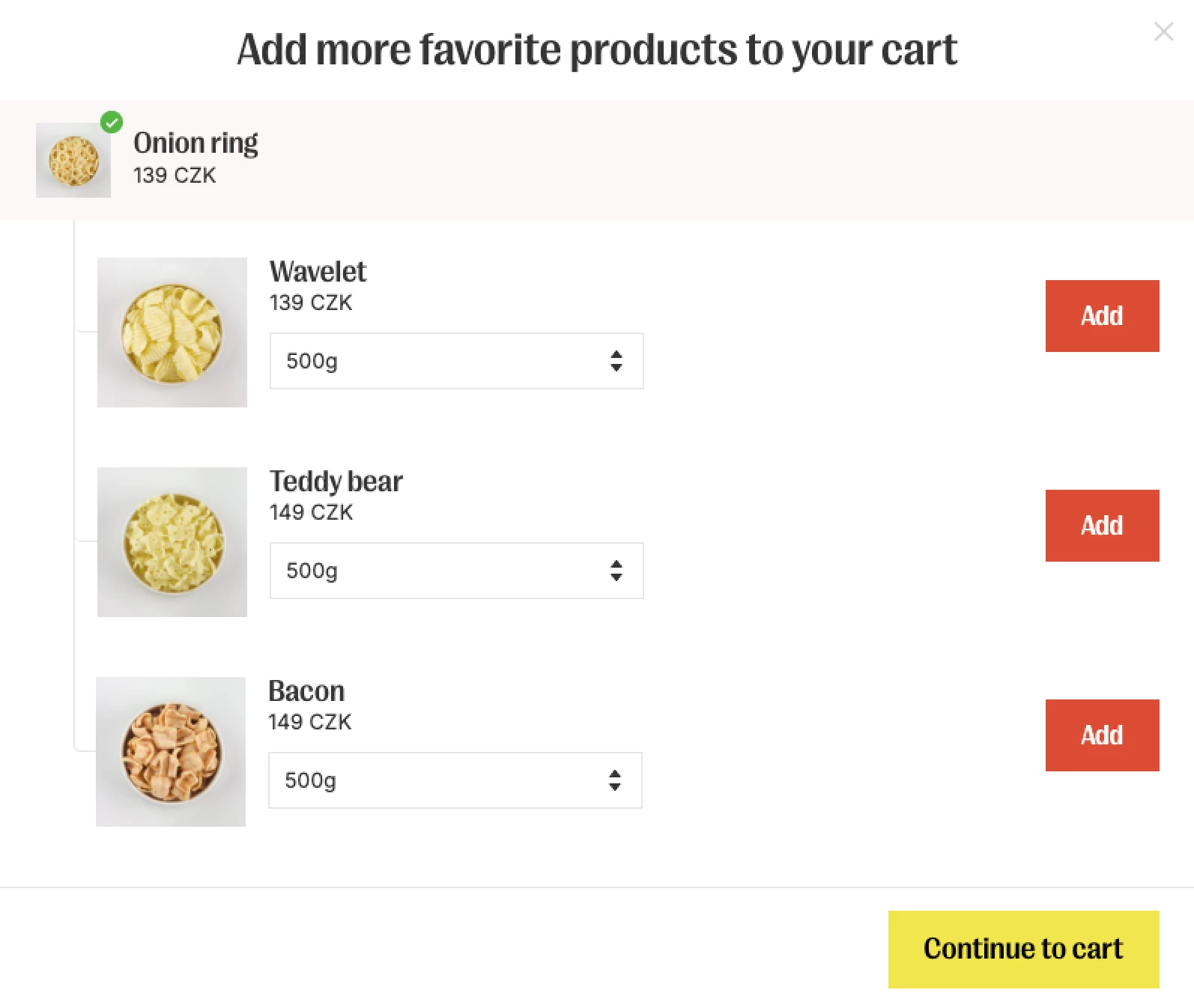
For example, if customer is buying a bed offering another bed as a cross-sell makes no sense, but when he buys a t-shirt, skincare product, or book offering similar items work great as a product discovery.
Which one should you use?
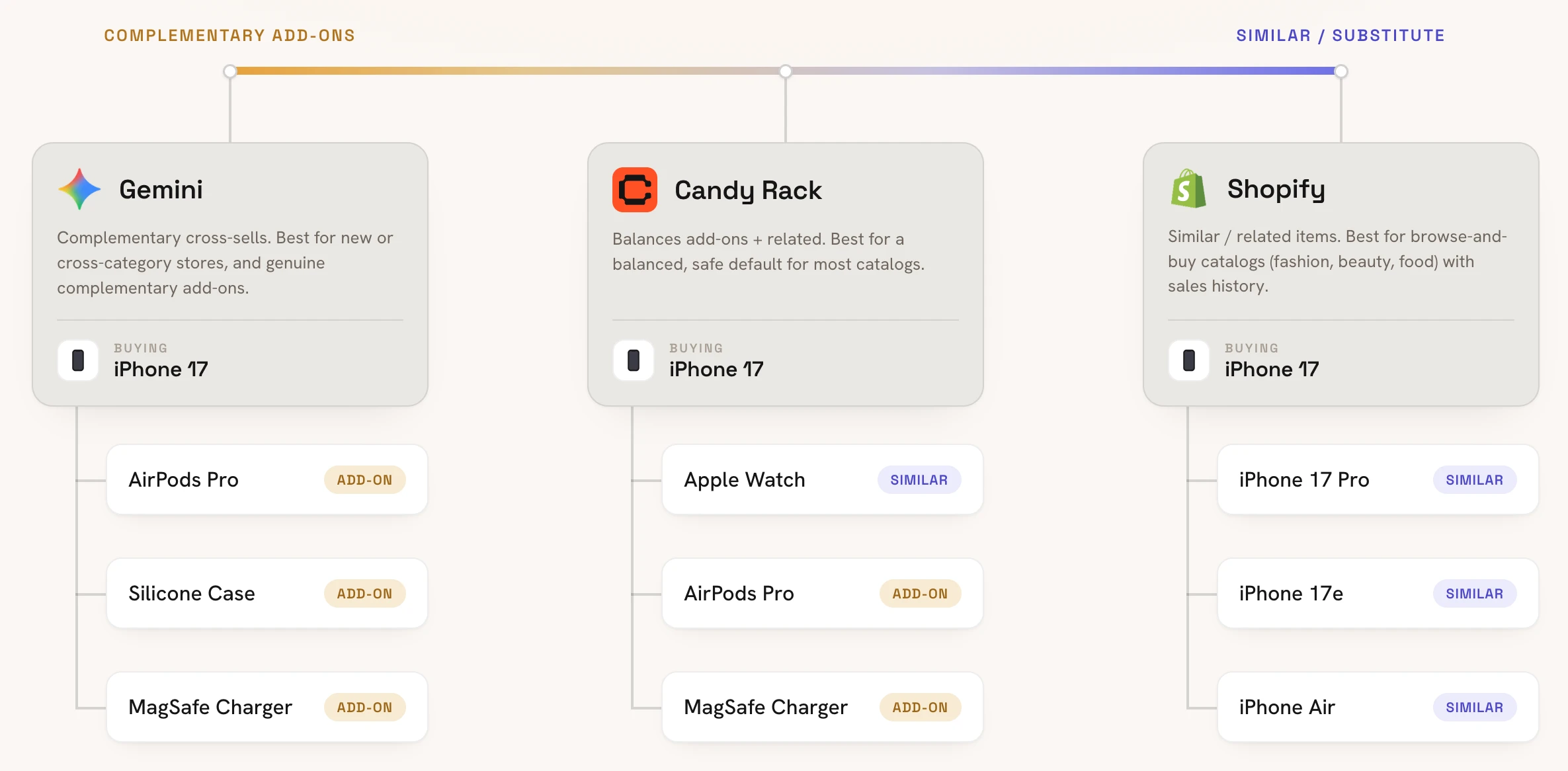
- Reach for Gemini when you want genuine complementary cross-sells that complete the purchase, when your catalog spans categories that obviously go together, or when a store or product line is new and has no history behind it. For example, a coffee store where a grinder pulls up beans, filters, and a mug, or an electronics store pairing a camera with a case and an SD card.
- Reach for the Candy Rack engine when you'd rather not commit to one extreme. It balances add-ons with related items, which makes it a sensible default for most catalogs and for the cart moment specifically. For example, a cosmetics store that offers a matching lip liner (the add-on) alongside another lipstick shade (more like it).
- Reach for Shopify when similar-item discovery is what actually converts for your category and you have the sales history to feed it. For example, a fashion store surfacing more dresses for someone browsing one, or a bookshop recommending more titles in the same genre.
- Combine them by placement. You don't have to pick just one: run Gemini or the Candy Rack engine on the product-page pop-up where add-ons shine, and Shopify in the cart or checkout, or whatever split fits your store.
- Still unsure? Test. Run one engine, watch your add-to-cart rate and average order value, then switch and compare. We're also adding built-in A/B testing, so you'll soon get clear per-engine performance data. Either way, our upsell strategy guide covers what makes any offer convert.
Turning it on
Open any offer, set Upsell type to AI mode, tick Select a specific recommendation engine, and choose Gemini, Candy Rack, or Shopify. Save, and the app picks the products from there, refreshing as your catalog and your shoppers change. You stay in control of the design, placement, discount, and copy.
The new engines are live in Candy Rack today for new merchants, a single click under AI mode the next time you create or edit an offer. If you don't see the engine selection option, just let us know through the in-app chat and we'll enable it for you.
Not running Candy Rack yet? Install it from the Shopify App Store and try all three.