Choosing who builds and runs your Shopify store will shape your growth for years. A freelancer tends to be faster and cheaper, an agency more reliable and broader. Neither is automatically the right choice, and the ideal setup is often a combination of both. Here is how they differ and what rates to expect in the Czech Republic, where we are based, compared with the US.
1. Dedicated time and capacity
Do you want certainty that your supplier will keep working on your store consistently? Then an agency is the safer choice. Lock the capacity in with an SLA or a framework agreement that guarantees a minimum number of hours per month. Agencies usually offer this from 30 hours a month, and the better ones let you roll unused hours over to the next period when you have less work or less time to brief them in a given month, for example during the summer holidays or the Christmas peak.
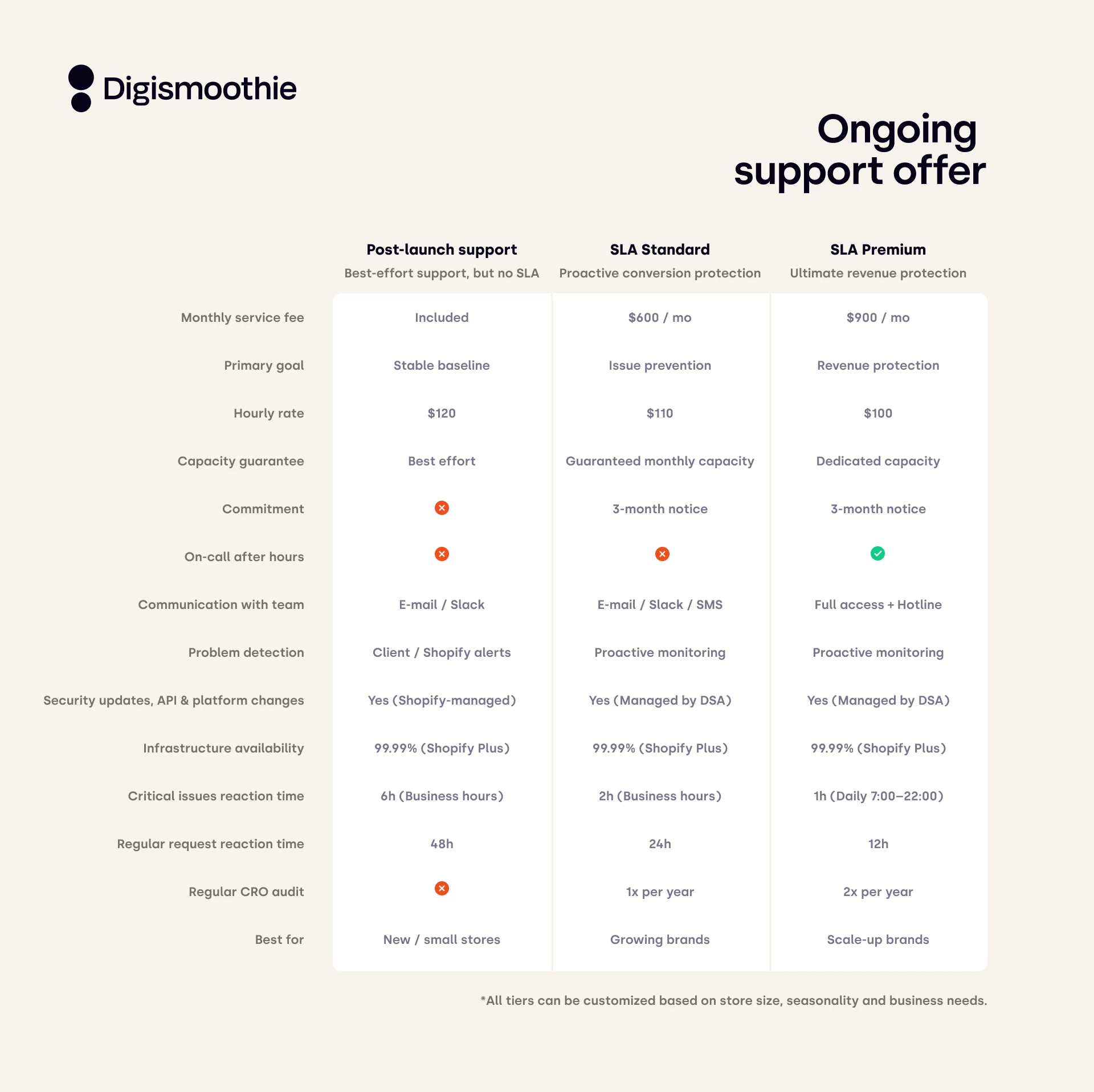
A good freelancer can commit to regular work too, but one person cannot offer the volume of hours a whole team can. You also have to accept that they cannot provide cover.
2. Cover when someone is out
What if your freelancer gets sick, goes on holiday or is fully booked because another project needs them? Your work waits, even if you have a framework agreement for a set day per week or a number of person-days per month.
Good agencies have a backup for every key role who can step in immediately, whether it's an illness or a seasonal peak like Black Friday. If occasional gaps in capacity don't bother you, a freelancer can work well. Many of our clients combine both: a freelancer for simple tasks, vibe coding, content page edits and simple landing pages, and an agency for complex work, especially building new features.
3. Range of services
An agency covers a much broader portfolio: development, design, UX, integrations, CRO and email marketing. Instead of coordinating several suppliers, you deal with one partner.
A freelancer's advantage is a narrow focus they usually know in great depth. If you need one specific thing done exceptionally well, a specialist can be a great choice. This typically applies to SEO, where it makes sense to bring in a freelancer who knows the field in detail. We recommend looking for an SEO specialist with proven experience on Shopify specifically.
4. Processes vs. flexibility
A good agency has set processes for taking in requests, estimating, planning and billing. That brings predictability, but you have to adapt to their system, or agree on a custom approach before you start working together.
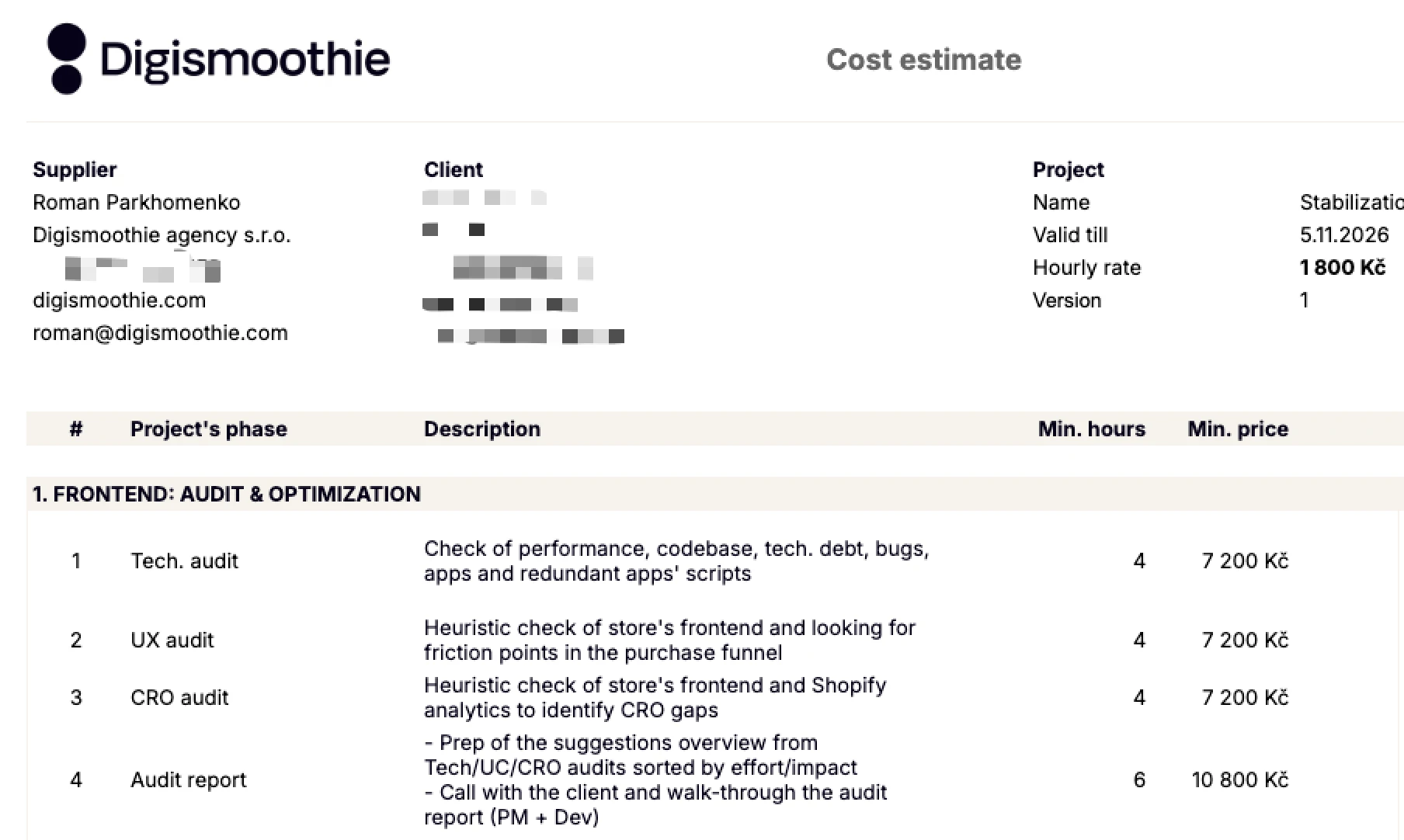
With a freelancer, you usually set the way of working yourself. That's flexibility, but also extra work on your side. You also need to think the brief through and specify it precisely. At an agency, the project manager does this: they turn your business requirements into a technical brief for the developers, filter out what isn't needed and help validate your requests. We often talk clients out of a request, or change it significantly, when we know its business impact would be negligible and it isn't worth doing. That is how an agency can save you money. A freelancer will often build whatever you ask for.
5. Personal attention
A freelancer usually has only a handful of clients, so you often get their full attention, especially on a part-time arrangement. At an agency, your day-to-day contact is usually a project manager who coordinates the team in the background.
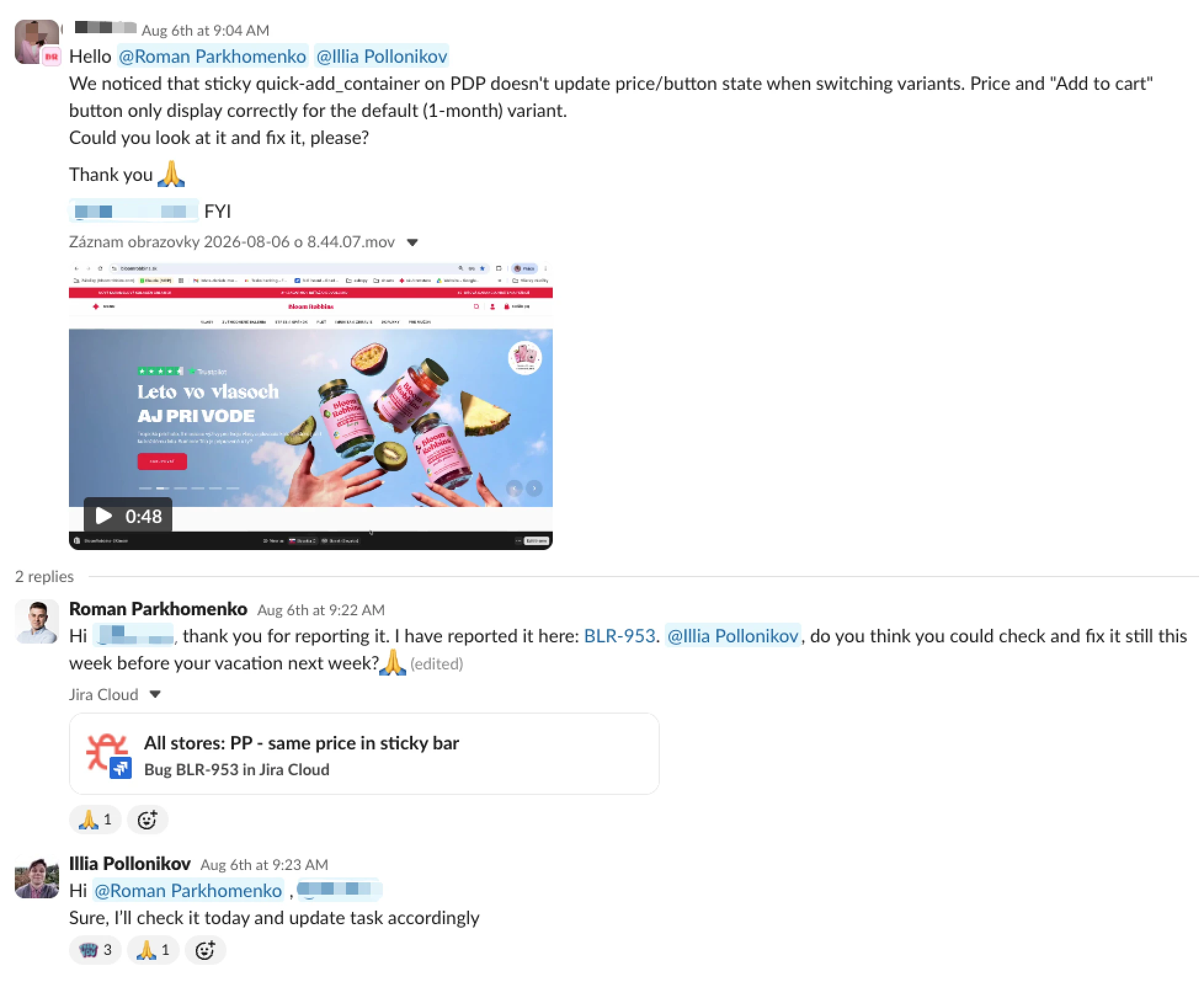
At good agencies, you can still reach the developers directly when needed, usually in Slack or in a project tool such as Jira.
6. Transparency
Agencies usually have established, often automated processes that make the work visible, especially if you have access to their project tool. At Digismoothie, clients see the total number of hours they have paid for, how those hours are being used, every individual task and all related communication within the team. They also get an automatic update in Slack on how each task is progressing. Call notes, recordings and transcripts of online meetings, and next steps that assign tasks to each side are a given. At our agency, AI takes care of that today.
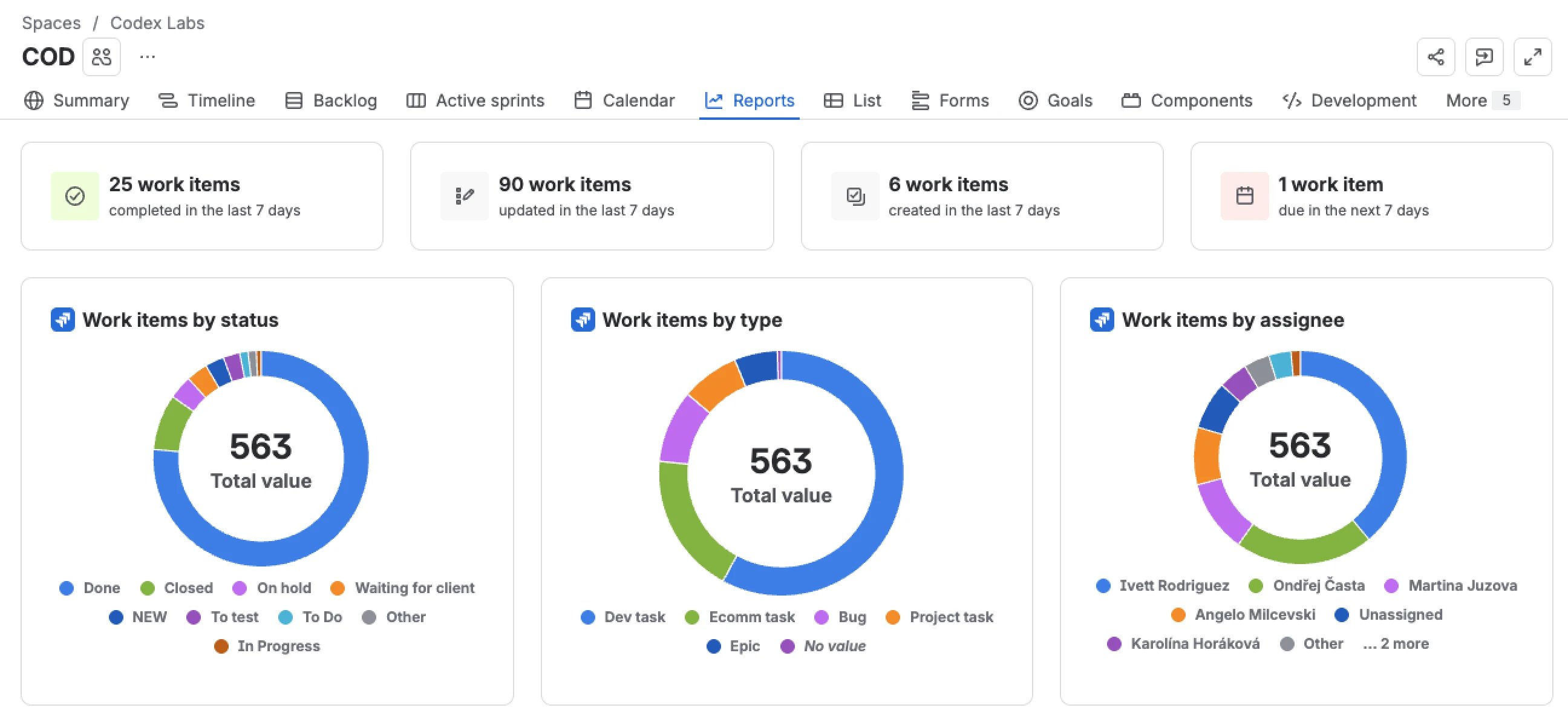
With a freelancer, the work can easily become a black box unless you set up the reporting yourself.
7. Communication
At a good agency, professional communication is the standard: changes announced in advance, structured reports and time sheets, often sent automatically. You also communicate with just one person, usually the project manager.
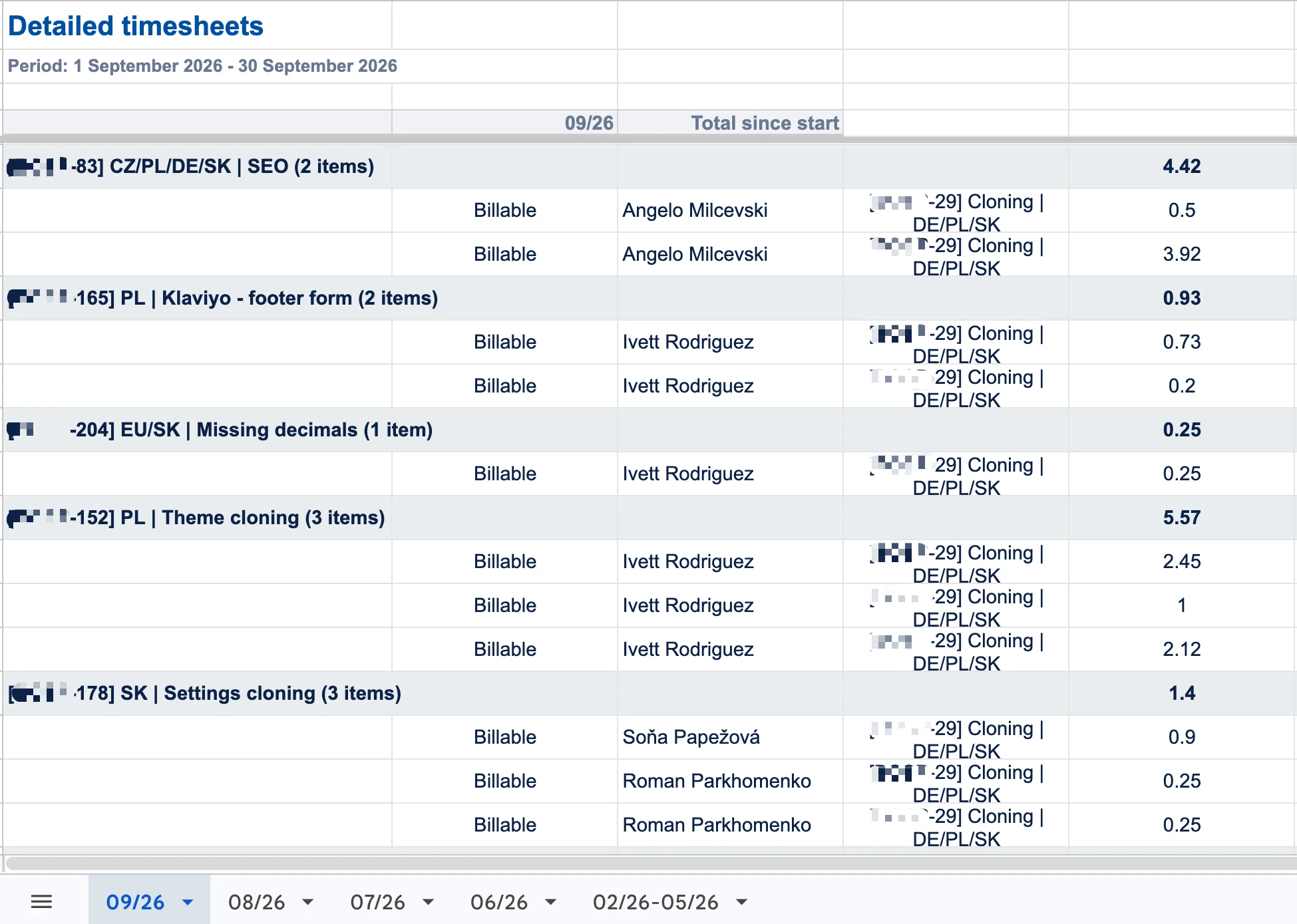
With freelancers, it depends on who you end up with. An experienced professional communicates as well as an agency. A newcomer may not.
8. Cost
When comparing the cost of a freelancer and an agency, don't look only at the hourly rate. These four factors matter most:
- How much capacity you actually need
- The type of engagement (SLA, prepaid hours, ad hoc work)
- The experience of the developer or agency
- How much your in-house team can handle on its own
Freelancers
A freelancer's rate depends mainly on seniority and specialization. Shopify freelancers in the Czech Republic usually charge CZK 900–1,500 per hour excl. VAT (roughly €35–60), and senior Shopify Plus specialists charge more. The same goes for SEO specialists: rates around CZK 2,500 (about €100) per hour excl. VAT are not unusual.
On top of the rate, add the costs on your side: time spent briefing, prioritizing, reviewing the output and coordinating the freelancer with your in-house team. You won't see them on the invoice, but you pay them.
Offshore freelancers
Platforms like Upwork or Fiverr tempt with low prices. The median hourly rate of Shopify developers on Upwork is around $20. Quality varies widely, though, in both code and design. Add time zone differences and slow responses, and even a small task can stretch into several days of back and forth. If you take this route, plan for careful selection and ongoing review of the work. A typical sequence: you assign a task today, within 2 days you get follow-up questions, you answer, the next day you get a cost estimate, within 2 days the freelancer starts, and the day after you usually have average to below-average output that you spend the following days giving feedback on and sending back.
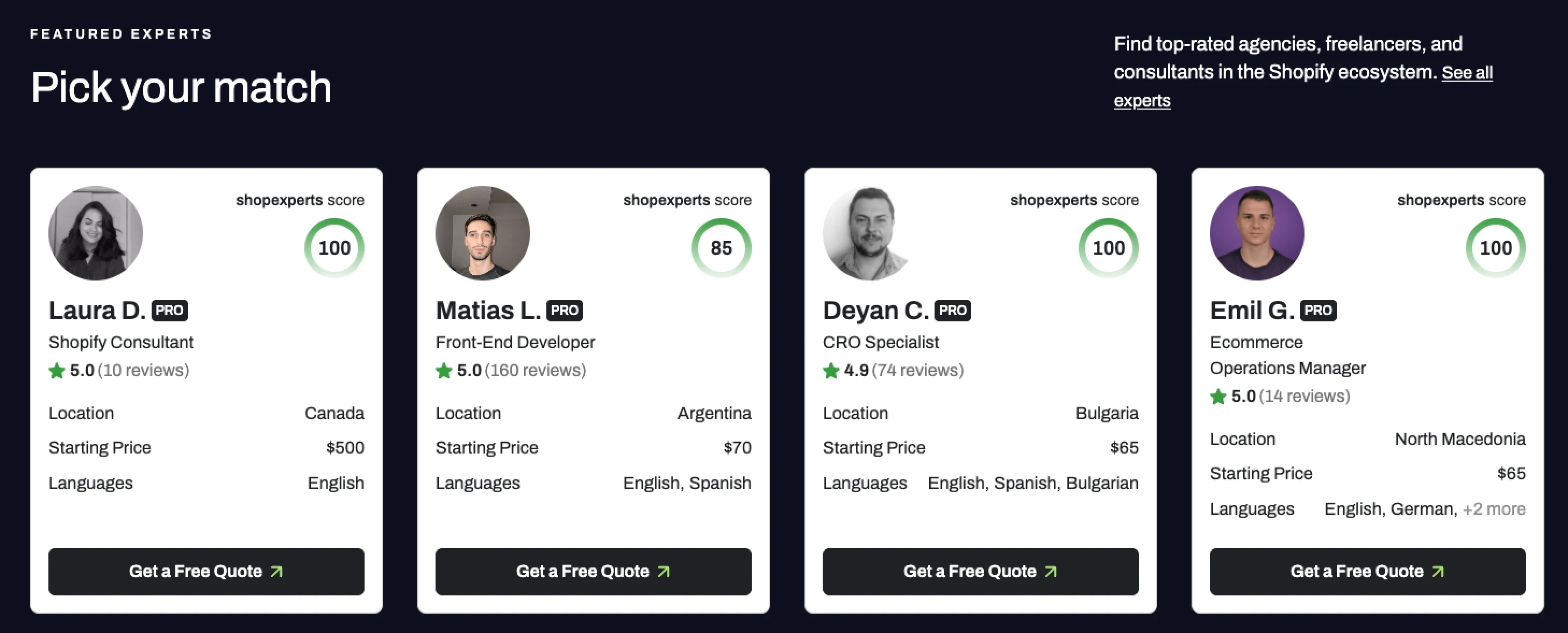
On the other hand, specialized platforms such as shopexperts can work very well, but the hourly price is also much higher, at around $70 (about €60).
Agencies
For Shopify agencies in the Czech Republic, expect CZK 1,500–2,500 per hour excl. VAT (roughly €60–100), depending on the agency's quality, specialization and the volume of work. With a framework agreement that includes a minimum monthly volume of hours (SLA), expect a discount of around 5–10%, depending on the number of hours, the contract length and the terms of the specific deal.
In dollars, that is roughly $70–115 per hour. For comparison, Clutch's pricing data puts US web development companies at $100–149 per hour.
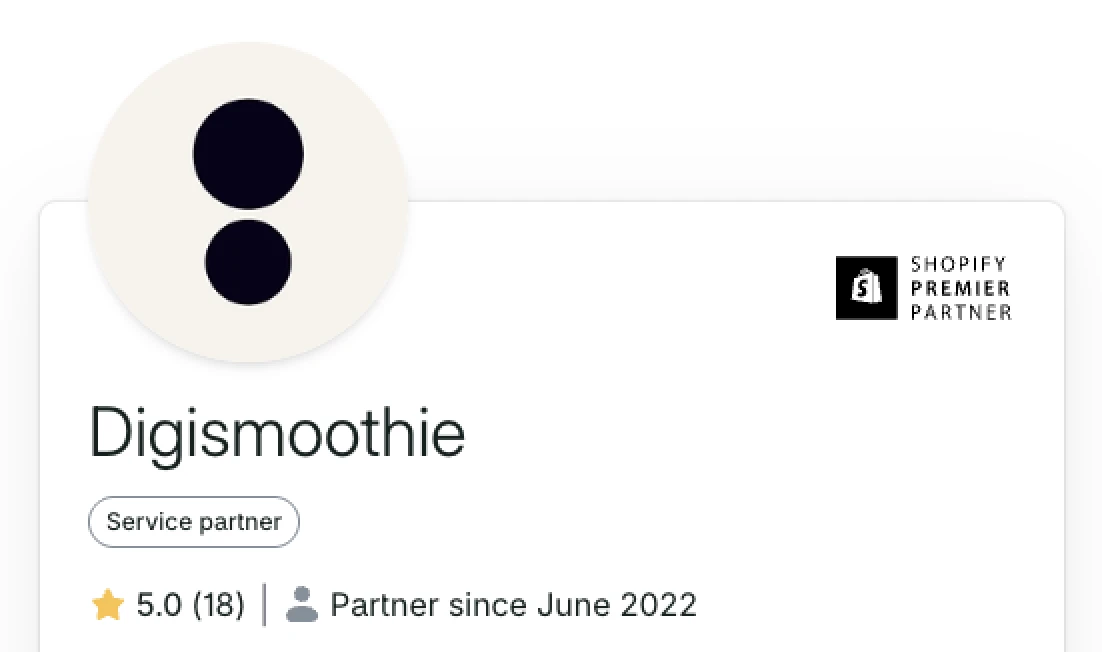
Most agencies and many freelancers are registered Shopify Partners. In the Shopify Partner Directory you'll see a badge showing their tier. Shopify currently uses five tiers:
- Registered: the entry level. Everyone who joins the Partner Program starts here, with no thresholds.
- Select: at least $100,000 in revenue from new referrals and co-selling (or $500,000 from existing merchants), plus at least 1 merchant on Shopify Plus/Enterprise or 10 merchants on standard plans.
- Plus: at least $500,000 from new referrals (or $2.5 million from existing merchants), plus at least 2 merchants on Plus/Enterprise or 40 on standard plans.
- Premier (our tier): at least $2 million from new referrals (or $10 million from existing merchants), plus at least 4 merchants on Plus/Enterprise.
- Platinum: at least $5 million from new referrals (or $25 million from existing merchants), plus at least 6 merchants on Plus/Enterprise.
Digismoothie is a Shopify Premier Partner, the only one in the Czech Republic or Slovakia and one of 4 Premier Partners in Central and Eastern Europe.
A tier measures commercial volume: how much revenue and how many new merchants a partner has brought to Shopify. It does not measure code quality, communication or how well a partner fits a store your size. Shopify also waived mandatory certifications for 2026, so the tier is purely about business results. The takeaway: partners in higher tiers simply have more experience with larger projects and clients.
Also, don't confuse the Plus partner tier with the Shopify Plus plan. A partner doesn't need the Plus tier to work on Plus stores, and a Plus badge doesn't mean they only work with Plus merchants.
Which tier fits your store
Whatever the tier, ask for two or three references from stores similar to yours and talk directly to the people who will work on your project.
Summary: is an agency or a freelancer better?
One person can look cheaper than a whole team of Shopify experts. But don't decide on price alone. The wrong choice often ends up costing you more because of constant rework on your store.
Consider how well equipped you are for the task and whether you know exactly what you expect from your supplier. If you're not sure, an agency will usually give you more support and help with business decisions too, as long as you share the necessary information with them.
If, on the other hand, you have clear requirements and understand the process, a freelancer may be the better fit. You handle most of the work in-house and hand the parts you can't cover to a freelancer who is an expert in that area.