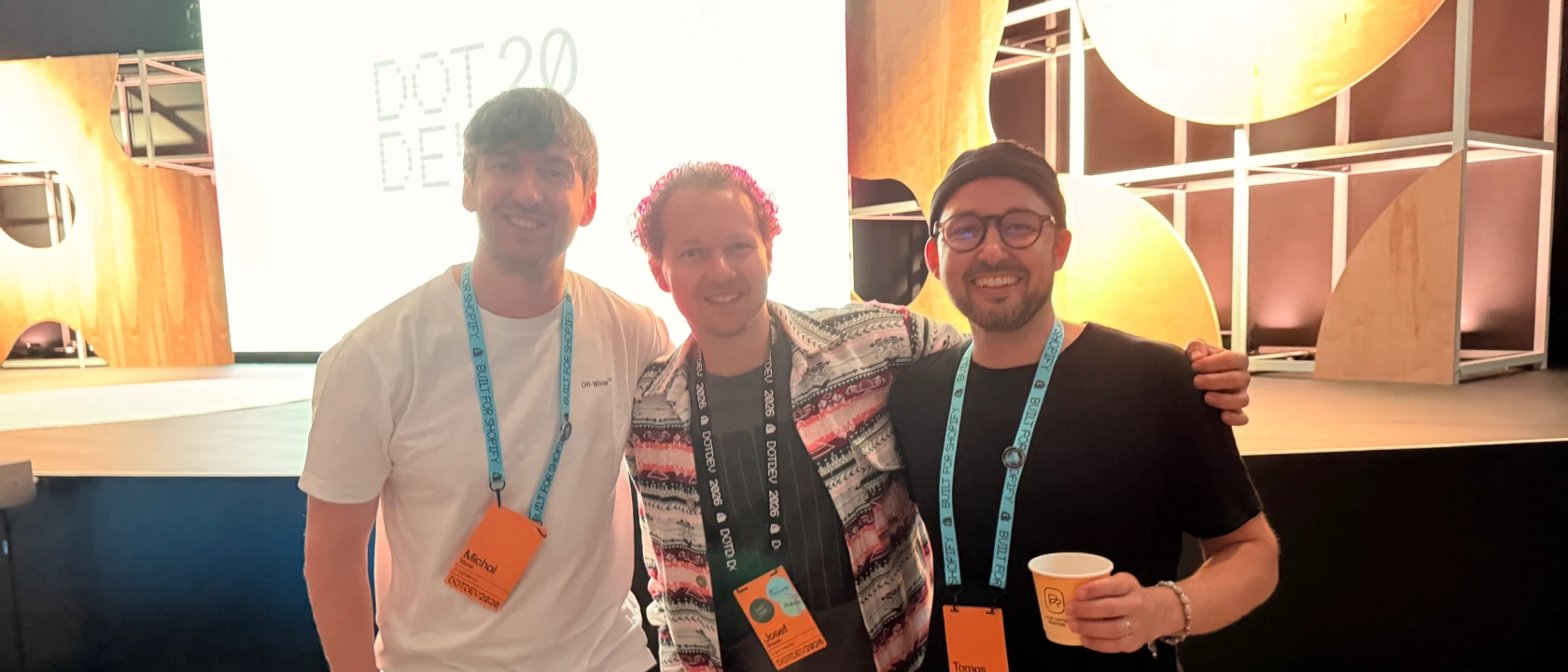
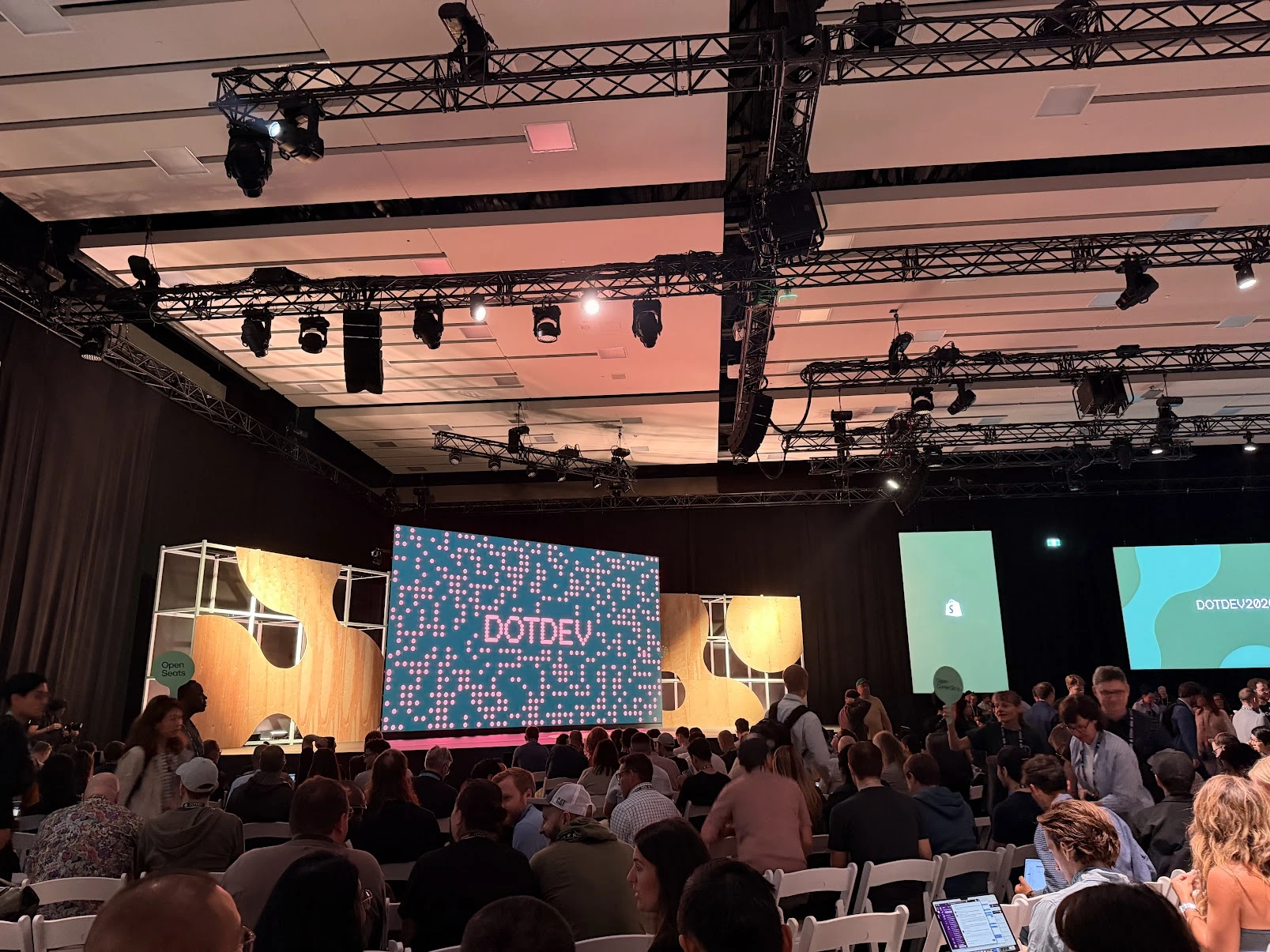
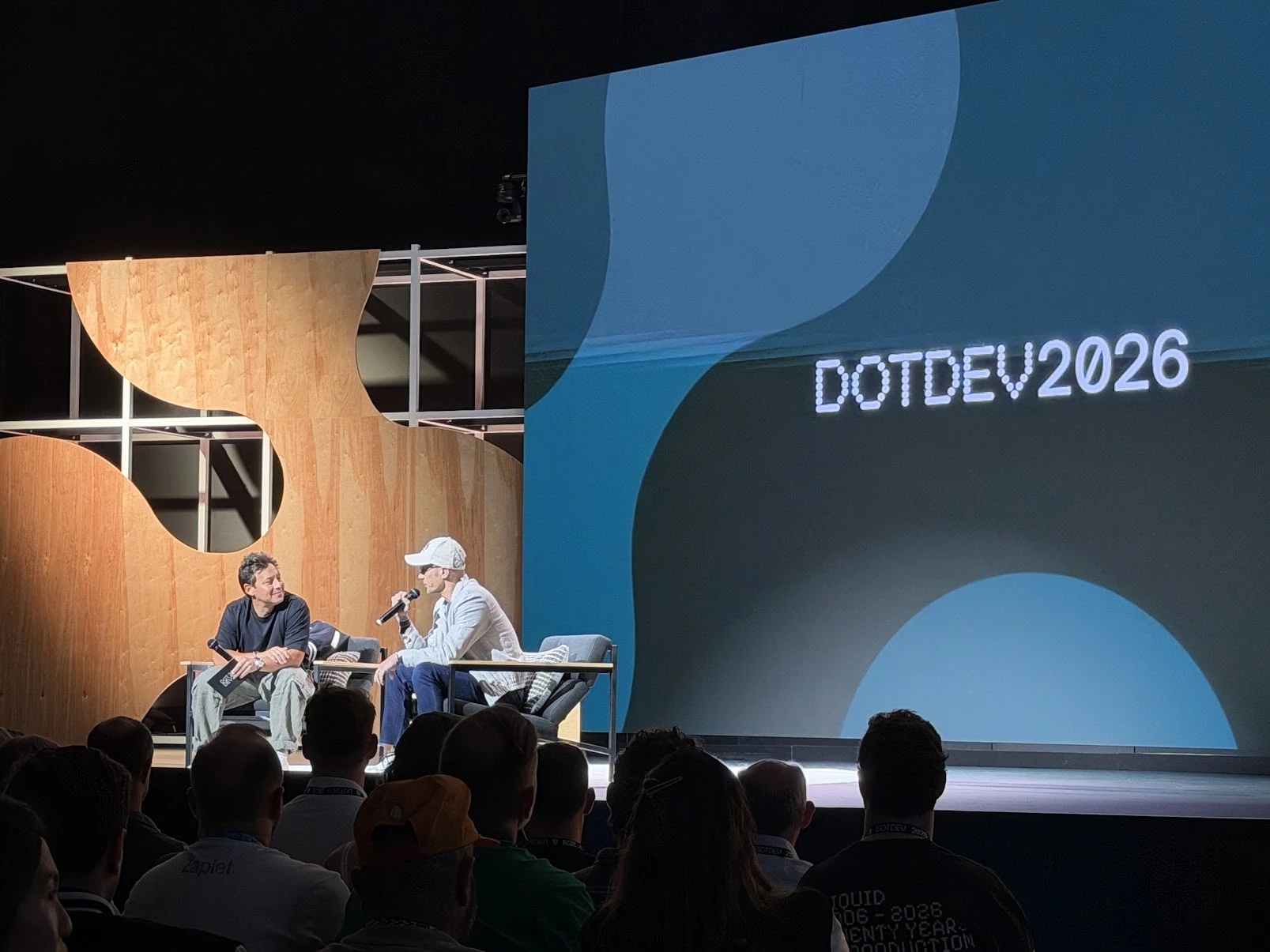
Una parte del nostro team ha passato il 21 e il 22 luglio al DotDev, l'evento di Shopify dedicato agli sviluppatori, a Toronto. Avevamo già raccontato che ci saremmo andati come parte della nostra apertura negli Stati Uniti, quindi ecco il seguito.
Tre cose hanno giustificato il volo: quello che i workshop hanno mostrato essere già realizzabile, una sessione scomoda sulla scoperta via IA, e una serie di conversazioni con altri fondatori di agenzie più utili di qualsiasi talk.

I merchant aggiungono app, non le consolidano
Il numero che ha riletto tutto l'evento: gli store con GMV alto usano ormai 37 app in media, tre in più dell'anno scorso. Su tutti gli store la media è di sette, due in più. Nel 2025 Shopify ha pagato 1,31 miliardi di dollari agli sviluppatori, il 24 % in più.
Nessuno sta semplificando il proprio stack. Le app che restano, quindi, sono quelle che riducono l'attrito tra gli strumenti invece di aggiungere un'altra dashboard. Shopify ha indicato tre modi per farlo: le estensioni Sidekick, gli admin intents, e mostrare i dati della tua app dentro Shopify Analytics anziché nella tua schermata di reporting.
Shopify non l'ha detto apertamente, ma leggendo tra le slide, quanto a fondo un'app usa queste integrazioni sembra stia diventando parte di come le app vengono scoperte. Non sono solo funzionalità, sono distribuzione.
Michal Marek, Digismoothie
I cinque workshop, e cosa è davvero pronto
Ogni workshop arrivava con un repository e un percorso di implementazione, quindi si usciva sapendo quanto costa realizzarlo e non solo che la funzionalità esiste. Qui lo stato conta più dell'elenco delle funzionalità.
Analytics integrate nell'app. Pronto per la produzione. Scrivere nei metafield dell'ordine, interrogare con ShopifyQL, mostrare card di metriche nella tua interfaccia. La stiamo valutando come seconda superficie per i dati di Setpilot.
Collection Sources. Pronto per la produzione nella versione API 2026-07, e serve esattamente quella versione perché le precedenti filtrano via queste collection. La tua app scrive un metafield di segnale e Shopify decide l'appartenenza alla collection. Non disponibile sui piani Starter e Retail. L'idea più pulita dell'evento.
Spedizioni guidate dal mercato. Solo in preview, tramite GraphiQL e development store. Profili di spedizione di proprietà dell'app, in grado di tariffare un intero catalogo e di convivere con le tariffe del merchant. Il rollout sui merchant parte il 1° ottobre 2026, per tutti entro il 1° luglio 2027.
È quella che metterei nel radar di ogni sviluppatore, e non per la funzionalità. Con essa vengono deprecate le API deliveryProfile di proprietà del merchant. Se hai un'integrazione di spedizione in produzione oggi, quella è una migrazione sulla tua roadmap.
Josef Rousek, Digismoothie
Dynamic Discounts. Pronto per la produzione. Classi di sconto su prodotto, ordine e spedizione in una sola Shopify Function, collegate a Flow e a un blocco di tema. Utile quando un merchant ha una regola ricorrente che copre più tipi di sconto.
Preordini B2B. Pronto per la produzione, solo con Shopify Plus. Prenotare senza selling plan: evasione differita, termini di pagamento, addebito alla spedizione.
La sessione che ha rimandato tutti a controllare il proprio store
I crawler IA leggono l'HTML di base, i dati strutturati e il testo reso lato server. Tutto ciò che viene iniettato lato client per loro è invisibile, e questo squalifica silenziosamente molte pagine prodotto.
I widget di FAQ e recensioni caricati lato client sono praticamente invisibili ai crawler IA, e quasi ogni store ne ha almeno uno. È un audit da quindici minuti con dietro un punto cieco enorme. Disattiva JavaScript e guarda la tua pagina prodotto, perché è più o meno quello che vede il crawler.
Michal Marek, Digismoothie

L'altra metà è il tuo robots.txt, scritto probabilmente prima che esistessero Claude-SearchBot, OAI-SearchBot, GPTBot e Storebot-Google. E il punto sulla formulazione che ci ripetiamo internamente: chi compra arriva con un problema, non con una keyword, e il linguaggio specifico vince. «Glazed donut skin» viene trovato, «pelle idratata» no.
Cosa stanno facendo gli altri fondatori di agenzie con l'IA
Le conversazioni nei corridoi sono state notevolmente coerenti. Tutti stanno investendo nella formazione delle persone che hanno già, e nessuno usa l'IA per vendere un lavoro diverso. La usano per fare lo stesso lavoro con meno.

Sui prezzi la cosa smette di essere teoria.
Se un'attività prima richiedeva dieci ore e ora ne richiede cinque più il costo degli strumenti, la maggior parte delle agenzie si è fermata intorno a sette. Nessuno fattura uno dei due estremi. Verso il cliente i token vengono convertiti in ore: due ore più 80 dollari di token diventano tre ore in fattura.
Tomáš Pěnka, Digismoothie
Altri due schemi sono rimasti. Su scala di agenzia, i piani superiori a tariffa fissa battono il prezzo a token, quindi i team danno i piani più alti alle persone chiave invece di controllare i consumi. E le agenzie con il pitch più affilato si specializzano su due o quattro settori, poi riciclano ogni successo in un case study per merchant simili in altri Paesi, arrivando con una risposta già progettata ai problemi principali del cliente anziché con un elenco di competenze.
Quello che ha confermato il nostro approccio: Adrian di e-tante.de, partner platinum in Germania, è passato da una discovery di una o due settimane a un processo di cinque o sei settimane con più workshop, e dice che funziona meglio. Il tempo speso a capire il problema all'inizio è il tempo più economico del progetto.
Le persone, in breve
Abbiamo parlato di ampliare la partnership con i fondatori di LoyaltyLion, passato tempo con i team di Klaviyo e Sufio e incontrato molte altre persone, tra cui la nostra partner manager Marina Vavilova e Justin D. Harris, che guida il team Sidekick di Shopify, composto da 100 persone.

La festa di chiusura, la Block Party, occupava due edifici espositivi con circa 8.000 persone, 2.000 partner e 6.000 dipendenti Shopify. Il più grande evento di una singola azienda a cui qualcuno di noi abbia partecipato. Sorprendentemente, non c'erano i Bloc Party, la band preferita del nostro ufficio. ;)
Cosa è finito sulla nostra lista
Verificare i dati prodotto resi lato server e la copertura del robots.txt, per noi e per i clienti. Guardare le analytics dell'admin come superficie di distribuzione per le nostre app, non solo come funzione di reporting. Controllare le nostre integrazioni di spedizione rispetto al calendario di deprecazione delle spedizioni guidate dal mercato.
Se vuoi questo tipo di conversazione più vicino a casa, la organizziamo anche noi. Abbiamo ospitato il meetup Shopify CEE nel nostro ufficio di Praga all'inizio di quest'anno, e lo rifaremo.