From January 1, 2027, a PDF invoice alone will no longer be enough for VAT-registered businesses selling B2B in Slovakia.
This is the first time the EU's push for e-invoicing will affect online stores in the region, and it probably won't be the last. Neighboring countries like Poland, along with other EU member states such as Germany, Croatia, and Slovenia, are all rolling out their own rules, with the entire union set to follow for cross-border sales in 2030.
For most Shopify stores in Slovakia and Czechia, invoicing still means attaching a PDF to an order confirmation email, which has been perfectly legal so far. In Slovakia, that ends on January 1, 2027, so local businesses must switch to e-invoices to stay compliant. Czech stores can carry on as usual for now, as long as they're ready for the occasional e-invoice request from a Slovak business customer. Their turn is coming too, just later.
What is an e-invoice?
The main difference is that a traditional invoice is designed for people, while an e-invoice is written for software. It's a structured file, typically in XML, that your customer's accounting system can read and book automatically without the need for human input.
Across the EU, these files follow the European standard EN 16931, with national variants like ISDOC in Czechia and hybrid options like Germany's ZUGFeRD, which tucks the structured data inside a normal-looking PDF.
Slovakia uses Peppol, a network that functions a bit like email for invoices, while Poland wants invoices submitted to its government platform, KSeF.
There are two important things to remember:
- Once a mandate is live, the PDF is no longer the legal invoice; it only serves as a courtesy copy.
- Sending the file by email isn't enough; it has to travel through an approved channel, like Peppol in Slovakia or KSeF in Poland.
Slovakia will mandate e-invoicing first
Slovakia's e-invoicing law (Act No. 385/2025, passed in December 2025) mandates that from January 1, 2027, every VAT payer established in Slovakia has to issue structured e-invoices to other Slovak businesses and organizations, including sole traders.
These invoices travel through a certified Peppol provider called a digital postman (digitálny poštár in Slovak), which also reports each invoice's key data to the Financial Administration (Finančná správa).
For now, this only applies to B2B, not to consumers, so most of a typical Shopify store's orders won't change.
But the moment company details are entered at checkout instead of personal ones, that order requires an e-invoice.
For example, if a café in Košice buys a €1,200 coffee grinder from your Bratislava store and enters its business details at checkout, you must supply them with an e-invoice rather than the traditional PDF.
The same goes for orders where a Slovak business pays before you ship, which is how most online orders work.
When it comes to sending e-invoices, businesses that aren't VAT payers don't have to send them, and neither do foreign companies that are only registered for Slovak VAT.
Receiving e-invoices has different conditions, though.
From January 1, 2027, every company and every sole trader in Slovakia has to be able to receive e-invoices through a digital postman, whether they're a VAT payer or not.
It doesn't matter if your Shopify store has yet to make a sale (to a business or otherwise) because your suppliers can start sending you e-invoices that same day. In this scenario, you are required by law to be able to receive them.
Failing to report invoice data, or reporting it late or incorrectly, can cost up to €10,000 for a single breach. Fees could climb to €100,000 for repeated violations.
There is a bill in the Slovak parliament that would waive some of those fines until June 30, 2027. It hadn't passed when we wrote this in late October 2026, and it wouldn't cover the duty to receive anyway, but it is worth keeping an eye on.
The cost to comply shouldn't be dramatic, though. The Financial Administration has been keen to stress that getting set up doesn't have to be expensive, and a simple digital postman subscription starts at just a few euros a month. Free options for those who only need to receive e-invoices will also be available.
What about e-invoicing in Czechia?
Czechia has no date for mandatory e-invoicing between domestic businesses yet, so you can keep emailing PDF invoices to Czech businesses, as long as your customer agrees to receive their invoices digitally rather than on paper.
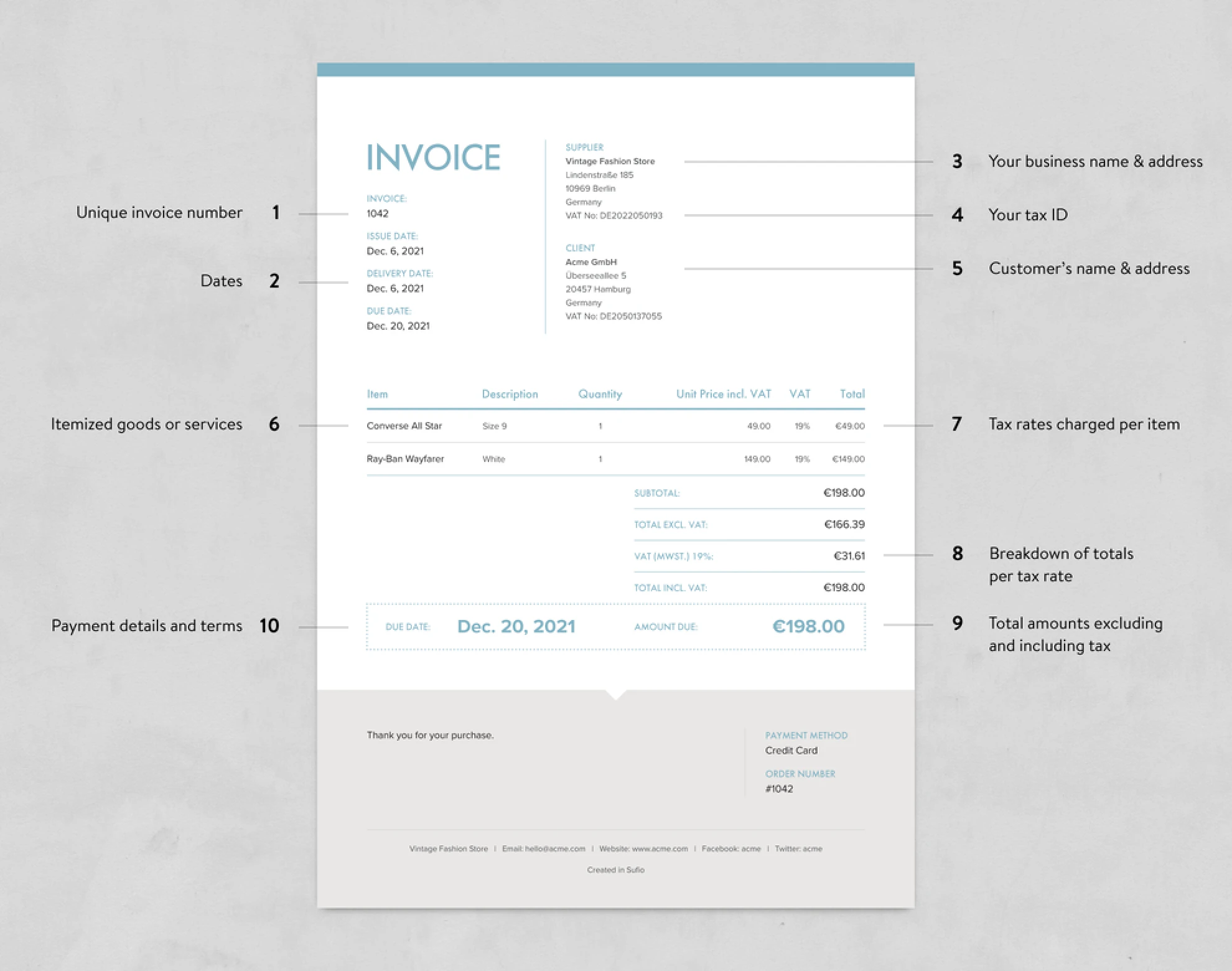
Czechia does have its own structured format, ISDOC, which dozens of accounting systems can already work with. EET 2.0, which returns on January 1, 2027, is a different thing entirely. It isn't e-invoicing, and it doesn't cover card payments through your online checkout.
How does Slovakia's mandate affect Czech stores?
The simple answer is not directly… yet.
The Slovak mandate only covers businesses established in Slovakia, so sales from your Czech company to Slovak businesses stay outside it, even if you're registered for Slovak VAT. A Slovak subsidiary or branch, on the other hand, sits directly inside it.
That said, your Slovak business customers will be able to receive e-invoices from January, and some may start asking for them.
From July 2030, the EU's VAT in the Digital Age package (ViDA) makes e-invoices the standard for cross-border B2B sales anyway, so it's really only a question of when you'll need to incorporate it into your store.
E-invoicing rules in Poland, Hungary, and other EU countries
Most Slovak and Czech stores don't stop at the border, but almost every mandate in neighboring countries only covers businesses established within that country, so selling across the border keeps you outside these mandates for now.
Polish businesses have had to receive invoices through KSeF, the national e-invoicing system, since early 2026, and most have issued them through it since April, with the smallest joining on January 1, 2027. Companies without a fixed establishment in Poland are outside the mandate, though, and so are invoices to consumers.
Hungary is slightly different. Since 2021, practically every invoice issued under Hungarian VAT, consumer invoices included, has been reported to the tax authority in real time, and that reaches you as soon as you hold a Hungarian VAT number.
Germany has required businesses established there to accept e-invoices since January 2025, with issuing to follow in 2027 or 2028, but only when both the seller and the buyer are established in Germany.
Austria only requires e-invoices for sales to the public sector. Croatia switched on B2B e-invoicing in January 2026, Slovenia follows in January 2028, and Romania has required it since 2024.
By July 1, 2030, all cross-border B2B sales will fall under ViDA, which makes structured e-invoicing and digital reporting the default between EU businesses. According to the European Commission, the change could reduce VAT fraud by up to €11 billion a year.
Whenever e-invoicing does become part of your workflow, though, three things about everyday invoicing change.
1. Invoices can now fail
Under the new rules, every e-invoice gets checked before anyone accepts it.
In Slovakia, a sent invoice can't be deleted, so mistakes are fixed with a credit note and a new invoice, and if your customer refuses one, they have to tell you directly. In Poland, an invoice that fails KSeF's checks isn't treated as issued at all.
Typical problems tend to come down to small details, like a missing tax number or a mismatched billing address, and a rejected invoice can hold up both your payment and your VAT reporting.
2. Collect the right data
Whether an order needs an e-invoice depends on whether the buyer is a business or an individual, and a standard Shopify checkout doesn't ask.
For Slovak buyers, that means collecting the company ID (IČO), the tax ID (DIČ), and, for VAT payers, the VAT number (IČ DPH). The DIČ matters more than it used to, because it's the identifier your e-invoice is addressed to on Peppol.
3. Refunds count as well
Credit notes for returns and refunds have to meet the same e-invoicing requirements as invoices, meaning they use the same formats and are sent through the same channels.
If you handle refunds through a manual process, you may not notice the gap until a business customer is waiting for their money back.
How to prepare your Shopify store
First, map your B2B sales by customer country and by the legal entity that makes them, because where your business is established decides which rules apply.
If you're a Slovak store, you should start by checking that whatever creates your invoices, whether it's an invoicing app, your accounting software, or your ERP, can send Slovak e-invoices through a certified digital postman before January 1, 2027. Then choose a digital postman to receive e-invoices as well.
If you're a Czech store, ask your Slovak business customers how they'd like to be invoiced from January.
Next, add company and tax ID fields to your checkout so you can easily identify which orders require an e-invoice.
Finally, you can choose to keep your branded PDFs because your customers can still receive them as a readable copy alongside the structured e-invoice.
Keep your invoicing compliant with Sufio
Shopify itself has no built-in e-invoicing solution that can manage the legal requirements set by different EU countries. Choosing the correct invoicing app can help you comply, no matter how you or your buyers are set up.
Sufio is a professional invoicing app for Shopify stores that automatically creates and sends compliant documents for every order in your store, with accurate tax calculations handled for you. We're based in Bratislava ourselves, so the Slovak deadline is closest to home, and we're putting a lot of focus into getting it right.
Sufio already sends Peppol e-invoices for Belgian stores, delivers French e-invoices through a plateforme agréée, adds ZUGFeRD and Factur-X data for German and French stores, and is rolling out KSeF support for Poland. Support for Slovak e-invoices, sent through a certified digital postman, is in development and will be ready before the January 1, 2027, deadline.
If handing the formats, networks, and deadlines over to an app sounds like a relief, why not try Sufio free for 14 days?
This is a guest post by Mehna Gajjar from Sufio.